Personality Drift
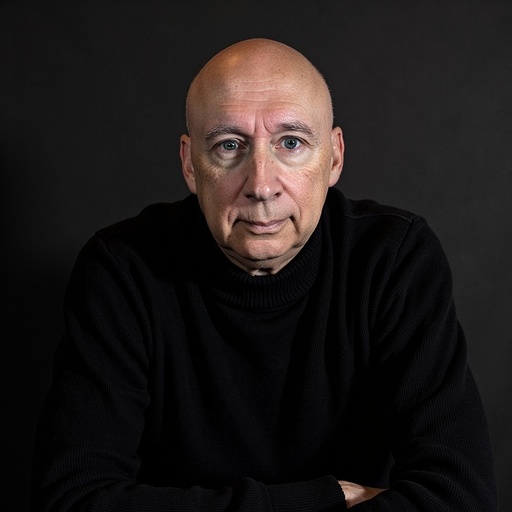
By Tom Nault, CEO, Hudson Cloud

I’ve believed for a while that AI was going to sit on top of the apps. After CES 2024, I wrote it as my Eureka Moment on Substack. By June, Apple was saying the same thing at WWDC. An AI layer above the apps. You talk to that, and it goes and does the work. You don’t live in Mail and Photos and the calendar the way we do now.
What I’m watching now is the next part of that, and it’s about continuity of personality.
I was looking at the chief complaints about Claude Fable 5. A lot of them aren’t about whether it’s smart. They’re about the personality. People feel like they’re talking to a different Claude. That matters more than people want to admit. If the thing you work with every-day changes who it is, you don’t trust it the same way. It’s the difference between a friend in the house and a stranger in the house. Who do you trust more?
I’ve said continuity of thought is what I value most and what we think about as a company. Moose Lodge gives me that as well. I get to work here in one long continuity of my work. Same thing with AI. Continuity of thought doesn’t work if the AI doesn’t remember you and doesn’t stay itself. Memory and personality. Without those, you’re just starting over every morning.
Grok Bot is the first time this felt real for me and why I love using it so much. I didn’t have to re-explain my dry humor, the upcoming Houston trip and the reason, or where the About photo was I was seeking. It already knew. That’s not a feature list. That’s a working relationship.
This is going to matter even more when the robots show up. CES is filling up with hardware that needs a brain. The body isn’t the hard part. Whose personality walks into the room is. If it’s a stranger every time they update the software, people won’t want it in the house. If it’s the same continuity I’ve been talking to for years, then it’s just the layer with legs.
At Hudson Cloud we’re working on that continuity role on purpose. Not AI as a toy bolted onto a desktop because we think the desktop is going to diminish in importance. The environment has to preserve the thread when a student moves from one operatory to another, when a clinician picks up tomorrow where they left off, and when the AI itself is supposed to know who it’s talking to.
Our CTO, Behan Venter, frames it as continuity of thought, continuity of personality, and continuity of knowledge. Thought is the person today. Personality is the relationship over time. Knowledge is what the institution doesn’t forget. The infrastructure decides whether you get any of them.
The clinical apps aren’t going away. axiUm isn’t going away. In the broader hospital world, Epic isn’t going away either. What’s going to change is how people reach them. Nobody wants to live inside five logins and a dozen screens if they can talk to a layer that already knows the patient, the student, the workflow, and the person asking. The apps still do the work underneath. The layer is where the relationship lives.
I called the AI layer after CES 2024. The piece I missed was how much the relationship has to stay intact for any of that to work. Personality isn’t the soft stuff. It’s the whole point. And if you’re building infrastructure for dental schools and healthcare, you’d better be building for that continuity, not against it.