CES 2026 and the Cost of Standing Still
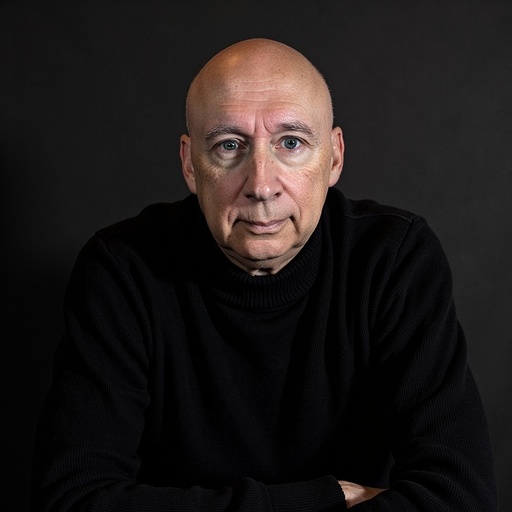
By Tom Nault, CEO, Hudson Cloud

I’ve been attending CES for more than two decades, and almost every year a group from Hudson Cloud comes with me. This January we had 21 people in our group, including members of the Hudson Cloud team. In many ways it feels like a reunion. We’ve all come from different directions over the years, but CES is still where we end up sitting around comparing notes, challenging each other, and trying to understand where technology is actually going.
Our group spans software architects, CEOs, investors, and people who have spent their careers building real systems. We don’t go to CES to be entertained or just to see gadgets. We go because it forces us to confront what’s changing and how fast it’s happening.
From the day Hudson Cloud was formed, we made a conscious decision to keep our eyes on the technology horizon. Not because it’s fashionable, but because companies that don’t evolve alongside technology eventually get left behind. CES has always been a good place to see that in real time.
One thing was obvious in 2026. CES is no longer about consumer electronics in the way it once was. The shift didn’t happen overnight, but it’s now impossible to miss. Devices matter less. Intelligence and autonomy matter more. And with that shift comes distance. We interact far less directly with the things we use every day.
Nobody cares what the DVD player looks like anymore. Nobody has a bookshelf stereo they’re proud to display. Most electronics are now black boxes tucked away somewhere, or hidden behind a screen that looks exactly like every other screen. The physical relationship we once had with electronics is largely gone.
CES reflected that change throughout the show.
AI wasn’t announced at CES 2026. It didn’t need to be. It was simply assumed. What became clear instead was something more subtle and more important: continuity. Continuity of work. Continuity of context. Continuity of thought as people move across screens, devices, and locations throughout the day.
Even companies that historically defined themselves by hardware were talking about this. Samsung, for example, centered its story on continuity across devices. That sounds simple until you think through what it actually means. This isn’t about syncing files. It’s about preserving a working mind without forcing people to constantly reconstruct what they were doing.
This is exactly the space Hudson Cloud has been operating in for years, long before there was widespread language for it.
Our core platform allows people to move from screen to screen while keeping their exact working environment intact. When people finally experience it, they realize how much friction they’ve quietly accepted as normal. Productivity improves. Clarity improves. Work feels less exhausting because it stops resetting itself every time someone changes devices or locations.
When we first built this, we didn’t fully appreciate how closely it would align with the rise of large language models. We understood continuity of work. We didn’t yet understand how central continuity of memory and reasoning would become. A customer pointed this out to us after looking across the landscape. We were focused on implementation, not on how far ahead of the curve we actually were.
This wasn’t a grand prediction. We were working in the right space at the right time, and the system we built fits naturally into where technology is headed.
CES also made something else clear, and this is where the conversation gets uncomfortable, especially for education.
Software and AI are moving quickly and exponentially, and we’re not used to that way of thinking. Institutional adoption is not. The gap between how modern work happens and how many institutions still operate is widening, not narrowing. Some schools see this and are taking action. Most are not. They think linearly. They don’t think about compounding technology.
The cost of delay isn’t abstract. It shows up as constrained research, outdated labs, frustrated faculty, and graduates entering the workforce behind the tools and workflows they’re expected to use. These are not future problems. They are happening now, and while that sounds like a generalization and a statement that could be made any year, they are not considering compounding effects.
CES is still valuable because it makes this gap visible in a way reports and strategy documents never can. You have to see it. That’s why we continue to attend, and why we encourage educators to come and observe what’s actually happening along with us.
Standing still has consequences.
Closing Thought
CES 2026 reinforced something that has been building for years. Technology is moving faster than institutions are willing to adapt. That gap is now being driven largely by LLMs and the systems forming around them.
Continuity of thought has become foundational to modern work, research, and learning. Environments that interrupt it quietly tax productivity and morale every single day. Institutions that delay modernization aren’t preserving stability. They’re accumulating risk, whether they choose to acknowledge it or not.
Hudson Cloud was built for this environment from the beginning. Our original vision was to allow people to work seamlessly across devices and locations without forcing them to start over.
The question for educational leadership is straightforward. Move deliberately now, or be forced to catch up later under pressure, at much higher cost.